What Is an LED Display? This guide explains how LED displays work, their main components, types, pixel pitch, installation methods, applications, and the latest LED display technologies.
Table of Contents
- Introduction
- LED Display Components: What Makes Up an LED Screen?
- How Is an LED Display Installed?
- How to Use an LED Display
- What Is Pixel Pitch in LED Displays?
- LED Display Types and Classifications
- How to Choose the Right LED Display for Your Needs
- New and Emerging LED Display Technologies
- The Future of LED Displays
1. Introduction – What is an LED display?
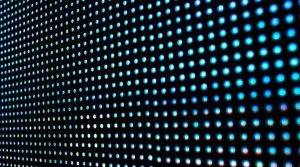
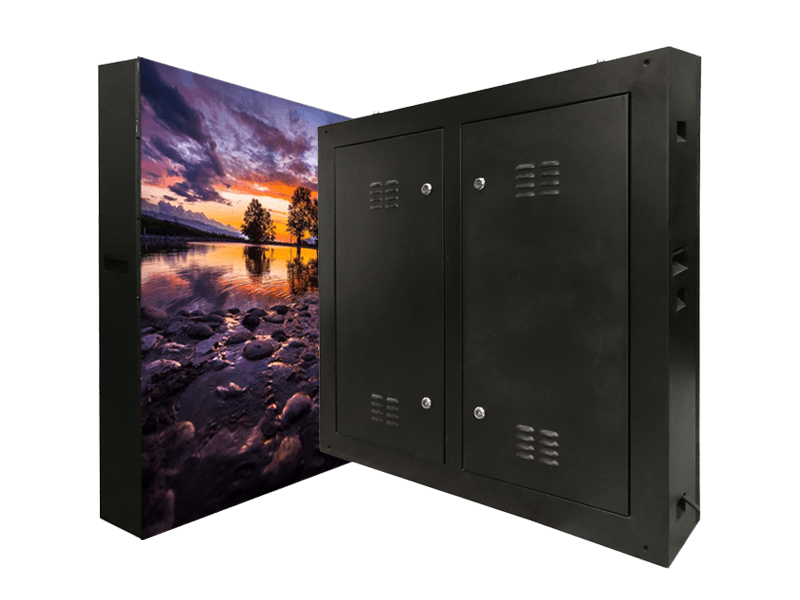
What is an LED display? An LED display is a digital screen that uses light-emitting diodes (LEDs) as pixels to display video, images, text, and other visual content. Unlike traditional LCD screens, direct-view LED displays are built from modular LED panels, allowing them to be customized into different sizes, resolutions, and configurations.
LED displays are widely used for indoor and outdoor advertising, retail stores, exhibitions, conference rooms, control centers, sports venues, stages, transportation hubs, and other commercial or public applications. Depending on the application, LED displays can be designed with different pixel pitches, brightness levels, cabinet structures, protection ratings, and control systems.
This guide explains how LED displays work, their main components, installation methods, pixel pitch, LED display types, selection considerations, and emerging LED display technologies.
2. LED Display Components: What Makes Up an LED Screen?
A complete LED display generally consists of four main components: LED modules, power supplies, cabinets, and control systems.
- The LED module is the display unit. It consists of a circuit board, ICs, LED lamps, and plastic parts. It displays video, images, and text through the brightness control of red, green, and blue (RGB) LED lights.
- The power supply converts AC mains electricity into low-voltage DC power, typically 4.2V–5V DC, to provide stable power for the LED modules and other electronic components.
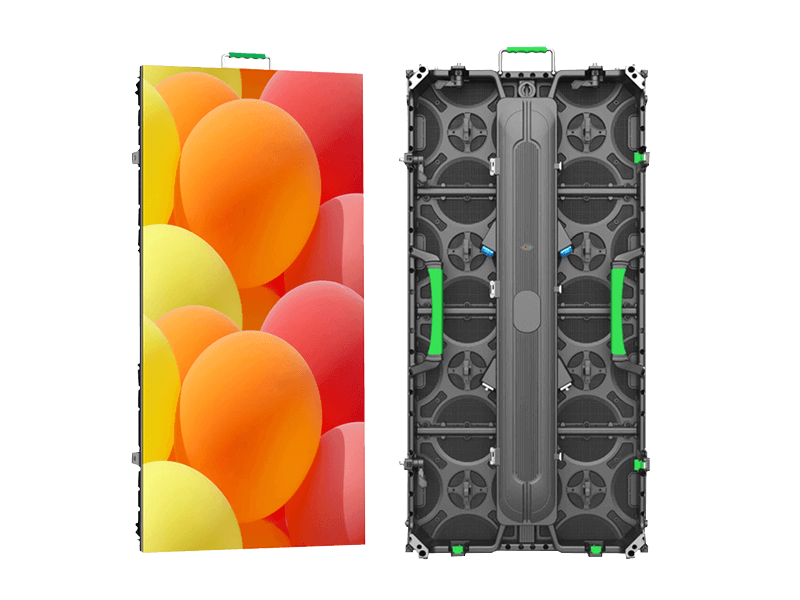
- The cabinet provides structural support for the LED modules, power supplies, receiving cards, and internal wiring. Depending on the application, cabinets may be made of die-cast aluminum, aluminum profiles, steel, or other materials and can provide different levels of dust and water protection.
- The control system is the brain of the LED display. It receives and processes image or video signals and controls how content is displayed across the LED modules. A typical system may include sending devices, receiving cards, video processors, and control software.
- In addition, a fully functional LED display system may also require a computer, power distribution cabinet, video processor, speakers, amplifier, air conditioner, smoke sensor, light sensor, and other auxiliary equipment depending on project needs.
3. How Is an LED Display Installed?
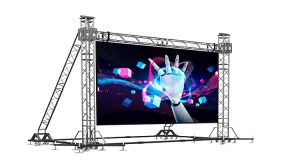
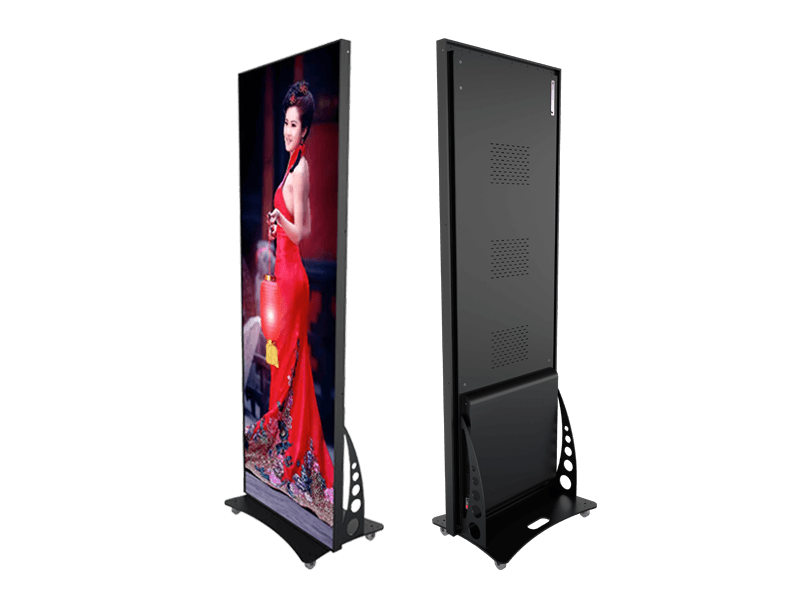
LED display installation methods vary depending on the screen size, application, building structure, and maintenance requirements. Common methods include wall-mounted, pole-mounted, suspended, floor-standing, and freestanding installations.
A typical LED display installation involves building a supporting structure, mounting and aligning the LED cabinets or modules, connecting power and signal cables, configuring the control system, and calibrating the screen for consistent brightness and color. Outdoor installations also require proper waterproofing, grounding, ventilation or heat dissipation, and structural consideration for wind loads.
For large or permanent LED display projects, the supporting structure and electrical system should be designed according to local engineering and safety requirements.
4. How to Use an LED Display
How an LED display is used depends mainly on its control system. Synchronous LED displays receive real-time video signals from computers, media players, cameras, or other video sources and are commonly used for events, studios, conference rooms, and large video walls.
Asynchronous LED displays can store and play content independently. Users can upload videos, images, text, and playlists through control software using Ethernet, Wi-Fi, 4G/5G, USB, or other supported communication methods. This makes them suitable for advertising screens and digital signage that need scheduled or remote content management.
After installation, users can also adjust parameters such as brightness, playback schedules, screen resolution, and other display settings through the control system.
5. What Is Pixel Pitch in an LED Display?
Pixel pitch is the center-to-center distance between adjacent LED pixels, measured in millimeters. It is usually expressed as “P” followed by a number—for example, P1.25, P1.86, P2.5, P3.91, P5, or P10.
A smaller pixel pitch places more pixels within the same display area, resulting in higher pixel density and better image detail at close viewing distances. Larger pixel pitches are generally more suitable for screens viewed from farther away, such as large outdoor advertising displays.
As a general reference, the pixel pitch in millimeters can be used as a rough guide to the minimum comfortable viewing distance in meters—for example, a P3 display may be suitable from around 3 meters or farther. However, the ideal pixel pitch should also consider screen size, content, resolution requirements, installation environment, and budget.
6. LED Display Types and Classifications
LED displays can be classified into different types based on installation environment, application, structure, and display technology. The most common LED display types include indoor LED displays, outdoor LED displays, rental LED screens, transparent LED displays, flexible LED displays, stadium LED screens, and fine-pitch LED displays. Each type is designed for different viewing distances, installation conditions, and application requirements.
Common Types of LED Displays
The main types of LED displays used in commercial and professional applications include:
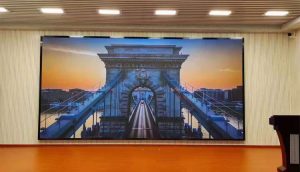
- Indoor LED Displays: Designed for shopping malls, retail stores, meeting rooms, control centers, exhibitions, and other indoor environments. They typically use finer pixel pitches and lower brightness than outdoor screens.
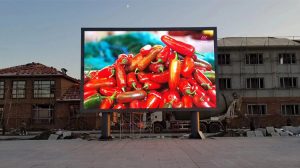
- Outdoor LED Displays: Built for outdoor advertising, building façades, public spaces, and roadside installations, with high brightness and weather-resistant protection.
- Rental LED Displays: Lightweight, modular screens designed for fast installation and dismantling at concerts, exhibitions, corporate events, and stage productions.
- Transparent LED Displays: Used mainly for glass windows, storefronts, showrooms, and building façades where visibility through the screen needs to be maintained.
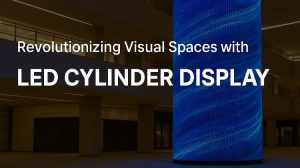
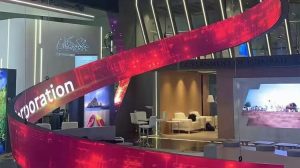
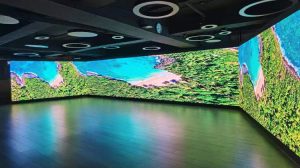
- Flexible LED Displays: Made with flexible LED modules that can create curved, cylindrical, concave, convex, and other creative display shapes.
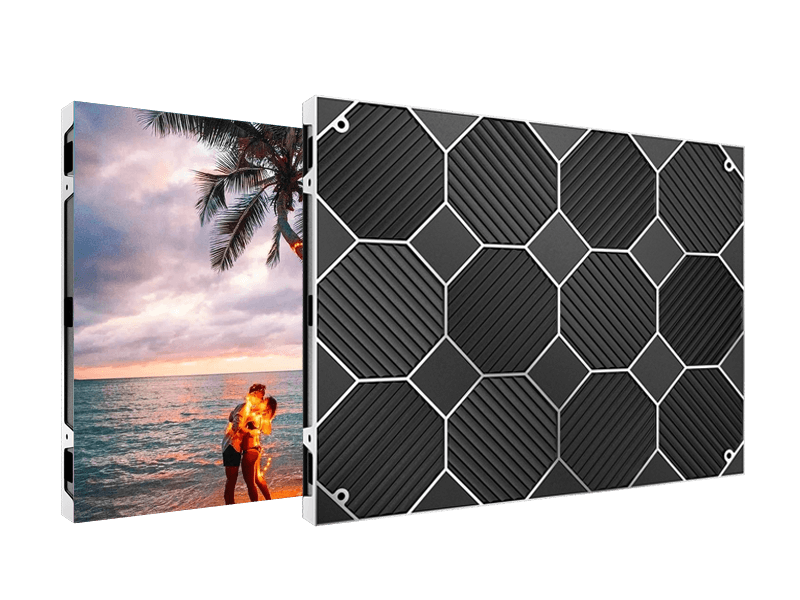
- Fine-Pitch LED Displays: High-resolution indoor displays designed for close viewing in conference rooms, control centers, broadcast studios, and premium commercial spaces.
- Stadium LED Displays: Designed for sports venues, including perimeter advertising screens, scoreboards, and large-format audience displays.
By Installation Environment:
- Outdoor LED displays require high brightness (typically ≥5,000 cd/m²) and weather-resistant protection against rain, dust, moisture, and UV exposure.
Semi-outdoor LED displays are placed in covered or protected locations like under eaves or behind glass.
- Indoor LED displays are generally designed for protected indoor environments and typically require lower brightness and finer pixel pitches than outdoor displays. They are widely used in meeting rooms, shopping malls, control centers, TV studios, airports, retail stores, and exhibition spaces.
By Control Mode:
- Synchronous displays require real-time input from a PC and stop working when disconnected. Suitable for large full-color or rental LED screens.
- Asynchronous displays store content on the controller and operate independently. Suitable for small to medium-sized advertising LED displays.
By Cabinet Structure:
- Simple cabinets: used for wall-mounted outdoor screens, with cost-saving aluminum-plastic panel waterproofing.
- Standard cabinets: used for freestanding or pole-mounted displays, with IP65 front and IP54 rear protection.
- Keel structure: often used in narrow scrolling text displays.
By Color:
- Single-color displays (mostly red) for text;
- dual-color displays (red and green) for yellow as well;
- full-color RGB displays for rich multimedia content.
By Communication Method:
- USB, Ethernet (wired), WiFi, 4G/5G depending on size and usage. Long-distance control via fiber is also possible.
By Usage Type:
- Fixed LED displays: permanently installed.
- Rental LED displays: lightweight, portable, easy to connect/disassemble, ideal for events and temporary setups.
7. How to Choose the Right LED Display
Choosing the right LED display starts with understanding the project’s application, installation environment, viewing distance, screen size, and budget. Before selecting a solution, consider these key questions:
- Where will the LED display be installed? Consider indoor or outdoor use and whether it will be wall-mounted, pole-mounted, floor-standing, hanging, or integrated into an existing structure.
- What screen size and viewing distance are required? These factors help determine the appropriate pixel pitch and resolution.
- What is the primary application? Advertising, events, retail, sports, control rooms, and other applications require different LED display types and specifications.
Other important factors include brightness, refresh rate, IP rating, maintenance method, control system, local climate, installation requirements, and overall project budget.
For a detailed selection process, see our LED Display Buying Guide.
8. New and Emerging LED Display Technologies
LED display technology continues to evolve, improving image quality, durability, installation flexibility, and creative design possibilities. Some important new and emerging LED display technologies include:
- Flexible LED Displays: Made from soft PCBs, bendable into curved or creative shapes.
- Transparent LED Displays: Grid-like structure for high visibility and transparency.
- Film LED Displays: Ultra-thin, lightweight, directly stickable to glass, futuristic aesthetics.
- GOB & COB: GOB adds a protective transparent resin layer over the LED module to improve moisture, dust, and impact resistance, while COB integrates LED chips directly onto the substrate for higher integration, durability, and fine-pitch performance.
- Hard-Connection: Using HUB boards instead of traditional wires for compact, stable connections.
- Front Maintenance: Allows repairs and servicing from the front side of the screen.
- Portable & Foldable: LED displays with collapsible structures for easy transport.
- Mini LED: Uses smaller LED chips and more densely arranged pixels than conventional LED displays, enabling finer pixel pitches, higher brightness, improved contrast, and better image quality. It is increasingly used in fine-pitch indoor LED displays, control rooms, broadcast studios, and premium commercial applications.
- Micro LED: Uses microscopic self-emissive LED chips to achieve extremely high pixel density, excellent contrast, fast response, high brightness, and long service life. Micro LED is considered an important direction for next-generation direct-view LED displays, especially for ultra-fine-pitch and high-end visualization applications.
9. The Future of LED Displays
LED display technology will continue to evolve toward finer pixel pitches, higher resolution, improved energy efficiency, lighter structures, and more flexible installation formats. Advances in Mini LED, Micro LED, COB, GOB, transparent LED, and flexible LED technologies are expanding the possibilities for both conventional and creative display applications.
In the future, LED displays are expected to become increasingly integrated with smart control systems, real-time content management, interactive technologies, and energy-saving solutions. From large outdoor advertising screens and stadium displays to fine-pitch indoor video walls and creative architectural installations, LED displays will continue to play an important role in digital communication and visual experiences.
In summary, what is an LED display? It is a modular digital display system built with light-emitting diodes to deliver bright, scalable, and highly customizable visual content. With continuous advances in LED display technology, today’s LED screens can serve an increasingly wide range of commercial, professional, and creative applications.


 English